A Physician-Guided Approach to Hormonal Weight Loss at Text2MD
Struggling to lose weight during menopause?
If you’re eating well, exercising, and still gaining weight—especially around your belly—you’re not alone. Many women in midlife experience stubborn weight gain that doesn’t respond to traditional diet and exercise advice.
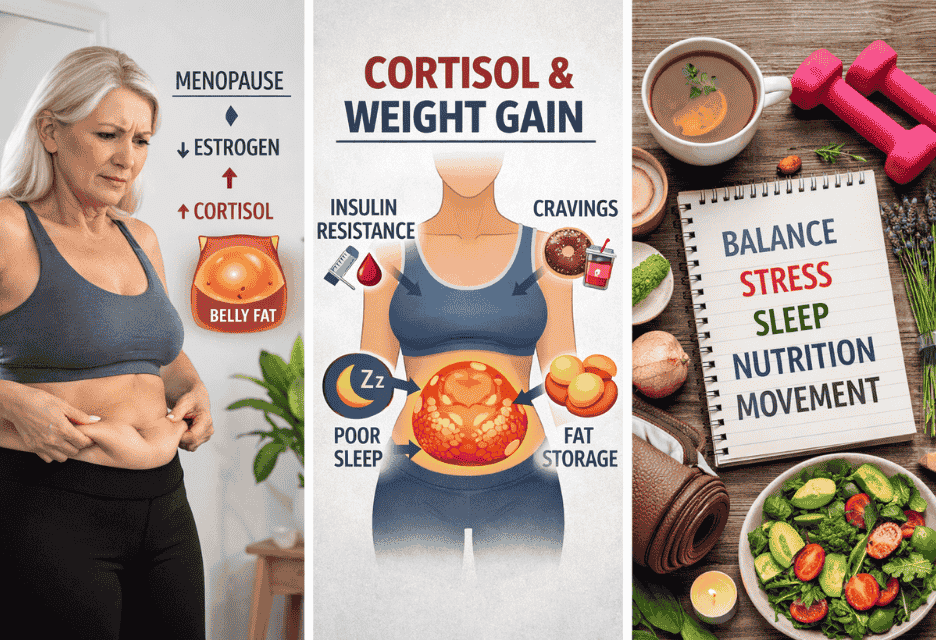
One major reason is cortisol, often called the stress hormone. Cortisol plays a central role in hormonal weight gain, insulin resistance, and abdominal fat storage, particularly during menopause.
At Text2MD, we take a science-based, hormone-aware approach to weight loss, including lifestyle strategies and, when appropriate, GLP-1 medications like semaglutide and tirzepatide. Understanding cortisol is a critical first step.
What Is Cortisol and Why It Affects Menopausal Weight Loss
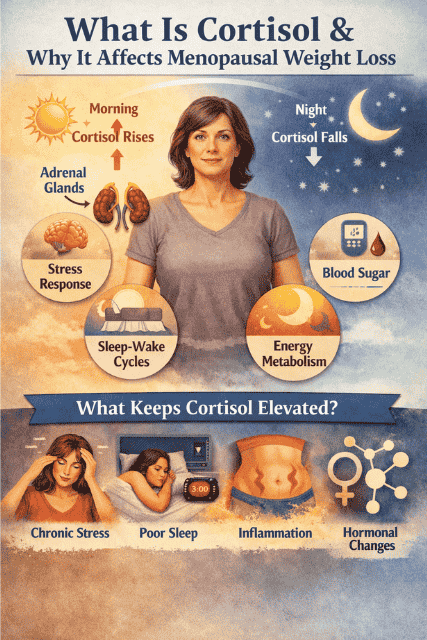
Cortisol is produced by the adrenal glands and helps regulate:
- Stress response
- Blood sugar
- Sleep-wake cycles
- Energy metabolism
In healthy patterns, cortisol rises in the morning and falls at night. However, chronic stress, poor sleep, inflammation, and hormonal changes can keep cortisol elevated.
During menopause:
- Estrogen levels decline
- Cortisol sensitivity increases
- Fat storage shifts toward the abdomen (visceral fat)
This explains why many women search for:
- “Why can’t I lose weight during menopause?”
- “Menopause belly fat causes”
- “Hormonal weight loss for women over 40”
High cortisol makes the body more likely to store fat and resist fat loss, even with calorie control.
Cortisol, Insulin Resistance, and Belly Fat
Elevated cortisol directly contributes to:
- Insulin resistance
- Higher fasting glucose
- Increased visceral (abdominal) fat
- Muscle breakdown
- Chronic inflammation
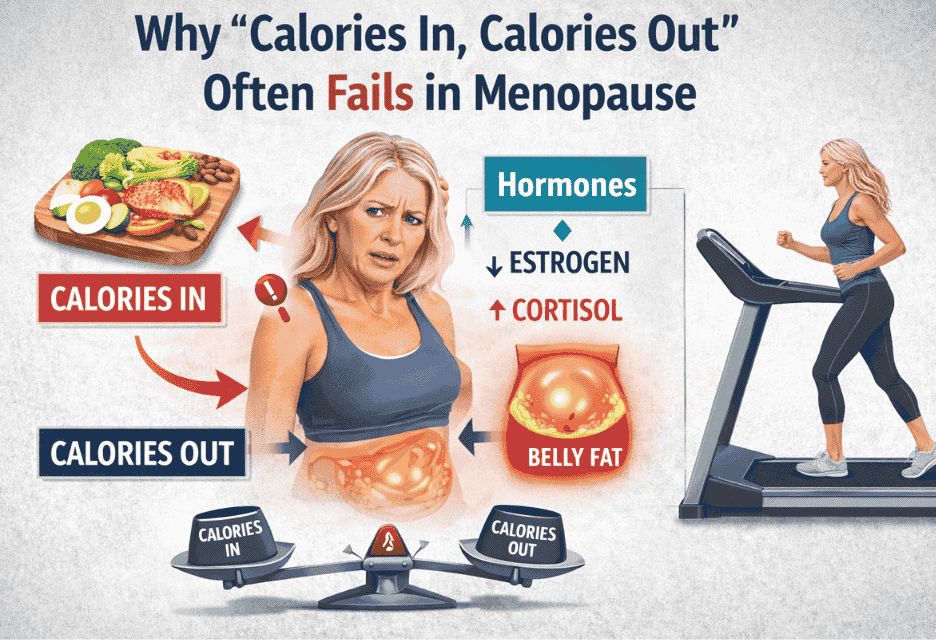
This hormonal environment works against weight loss and explains why calories in, calories out often fails for menopausal women.
At Text2MD, we frequently see patients who:
- Eat fewer calories but feel exhausted
- Exercise more but gain weight
- Experience poor sleep and sugar cravings
These are classic signs of stress-driven metabolic dysfunction.
Why Traditional Dieting Fails in Menopause
Standard advice like “eat less and exercise more” can actually raise cortisol further, especially when combined with:
- Aggressive calorie restriction
- Excessive cardio
- Poor sleep
High cortisol reduces metabolic flexibility and signals the body to hold onto fat for survival.
This is why sustainable weight loss in menopause requires a hormone-first strategy, not willpower.
Intermittent Fasting in Menopause: Helpful or Harmful?
Intermittent fasting is popular, but its effects on menopausal weight loss are mixed.
What may help:
- Short fasting windows (12–14 hours)
- Adequate protein intake
- Stable daily nutrition
What may hurt:
- Prolonged fasting
- Skipping meals regularly
- Very low calorie intake
For many midlife women, aggressive fasting increases cortisol, worsens sleep, and slows metabolism.
At Text2MD, we individualize fasting strategies—or avoid them altogether—based on hormonal symptoms, sleep quality, and metabolic health.
5 Evidence-Based Ways to Lower Cortisol and Support Weight Loss
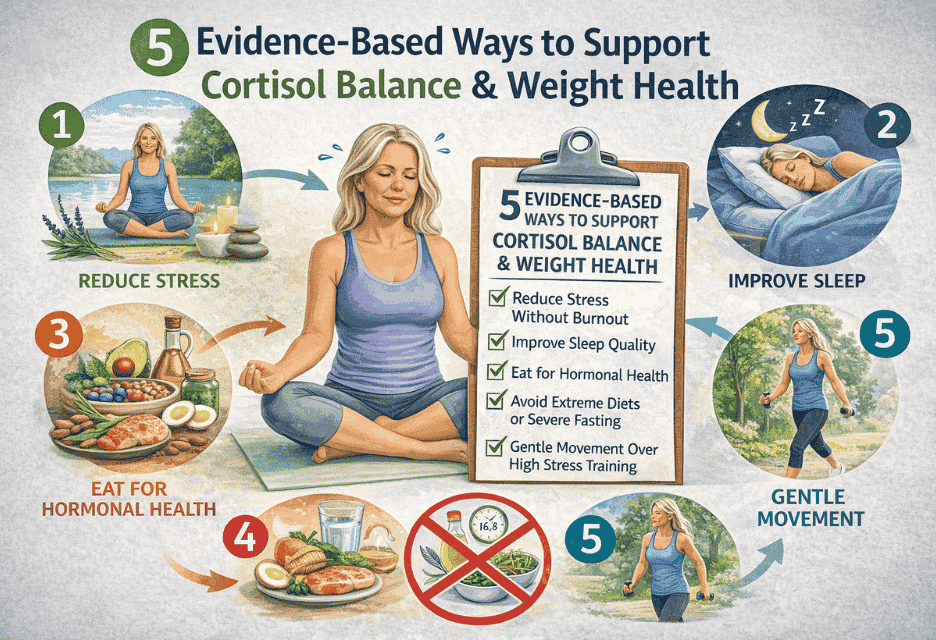
1. Stress Reduction That Actually Works
Chronic stress is a major driver of hormonal weight gain. Effective cortisol-lowering strategies include:
- Mindfulness or breathwork
- Gentle yoga
- Time outdoors
- Reducing overtraining
These approaches are more effective than high-intensity workouts for many menopausal women.
2. Improve Sleep to Improve Weight Loss
Poor sleep raises cortisol and insulin resistance. Sleep is one of the most powerful natural weight-loss tools.
Prioritize:
- Consistent bedtime
- Dark, cool sleeping environment
- Limiting late-night screens and caffeine
Many patients notice fat loss improves once sleep is corrected.
3. Eat for Hormonal Balance
Instead of extreme dieting, focus on:
- High-quality protein at every meal
- Fiber-rich vegetables
- Healthy fats
- Stable blood sugar
This reduces metabolic stress and helps normalize cortisol levels.
4. Avoid Extreme Diets and Crash Programs
Severe restriction sends a starvation signal to the brain, increasing cortisol and slowing fat loss.
If weight loss feels harder the more you restrict, your hormones may be working against you.
5. Choose Sustainable Movement
Exercise should support metabolism, not stress it.
Best options during menopause include:
- Strength training
- Walking
- Low-impact cardio
- Recovery-focused workouts
At Text2MD, we emphasize muscle preservation, especially for patients using GLP-1 medications.
Hormonal Weight Loss Requires a Different Strategy
Menopausal weight gain is not a failure of discipline. It’s a predictable physiological response to:
- Hormonal shifts
- Chronic stress
- Sleep disruption
- Insulin resistance
The solution is not extreme dieting—it’s hormone-aware care.
At Text2MD, our weight loss approach focuses on:
✔ Metabolic and hormonal evaluation
✔ Cortisol-aware lifestyle strategies
✔ GLP-1 medications when appropriate
✔ Ongoing physician support via telemedicine
Get Help With Hormonal Weight Loss at Text2MD
If you’re struggling with menopausal weight loss, belly fat, insulin resistance, or stress-related weight gain, you don’t have to figure it out alone.
Text2MD offers physician-guided weight loss programs, including:
- Semaglutide and tirzepatide consultations
- Hormone-aware nutrition guidance
- Telemedicine follow-up and support
👉 Schedule your weight loss consultation with Dr. Antonatos and start working with your biology—not against it.