Hot flashes & night sweats
Temperature surges, sweating, waking overheated, or sleep disruption.
Start with a focused physician consultation that reviews your symptoms, medical history, medications, health risks, previous treatment, and whether hormone therapy or a non-hormonal option may fit your situation.
See what patients say about Text2MD physician access, communication, continuity, and overall care.

Better sleep. Fewer hot flashes. More stable mood. Better daily function. More confidence in your body and your health decisions.
Symptoms can overlap with thyroid disease, anemia, sleep disorders, depression, medication effects, metabolic problems, and other conditions. That is why the visit starts with the whole picture.
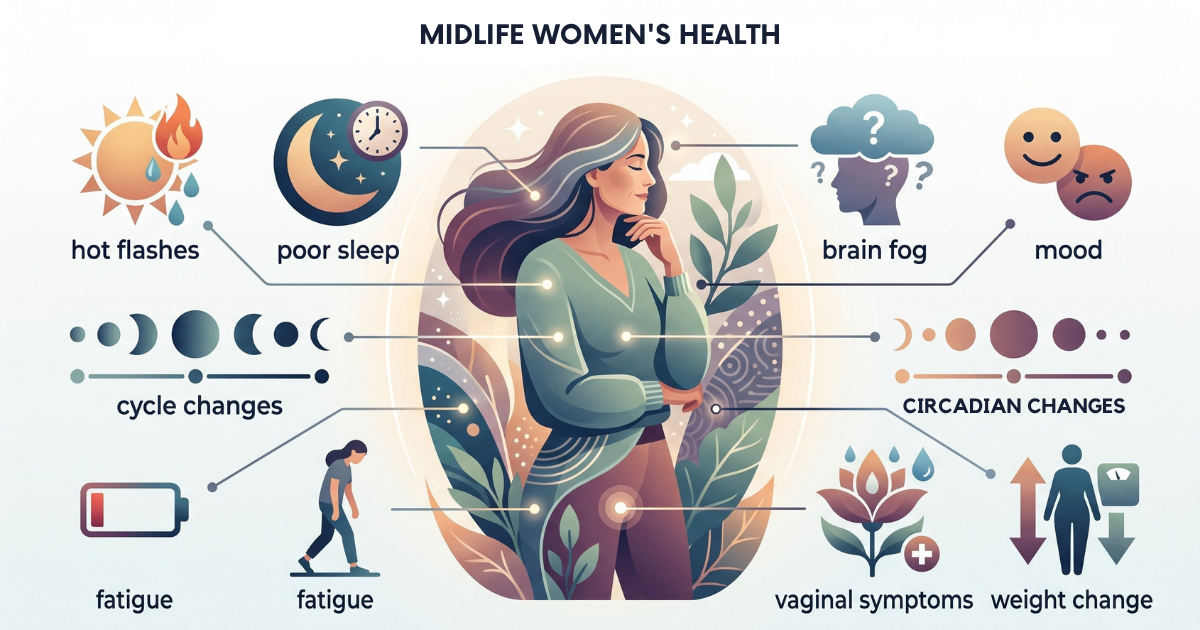
Temperature surges, sweating, waking overheated, or sleep disruption.
Frequent waking, insomnia, early awakening, or waking unrefreshed.
Irritability, anxiety, emotional swings, or feeling unlike yourself.
Word-finding problems, forgetfulness, poor concentration, or mental fatigue.
More abdominal fat, lower muscle mass, appetite changes, or harder weight maintenance.
Dryness, discomfort, painful intercourse, urinary urgency, or recurrent urinary symptoms.
Irregular timing, skipped periods, heavier or lighter bleeding, or perimenopausal transition.
Fatigue, reduced exercise tolerance, slower recovery, or declining daily function.
Many women do not know where they are in the transition—or whether their symptoms fit. This is one reason individualized evaluation matters.
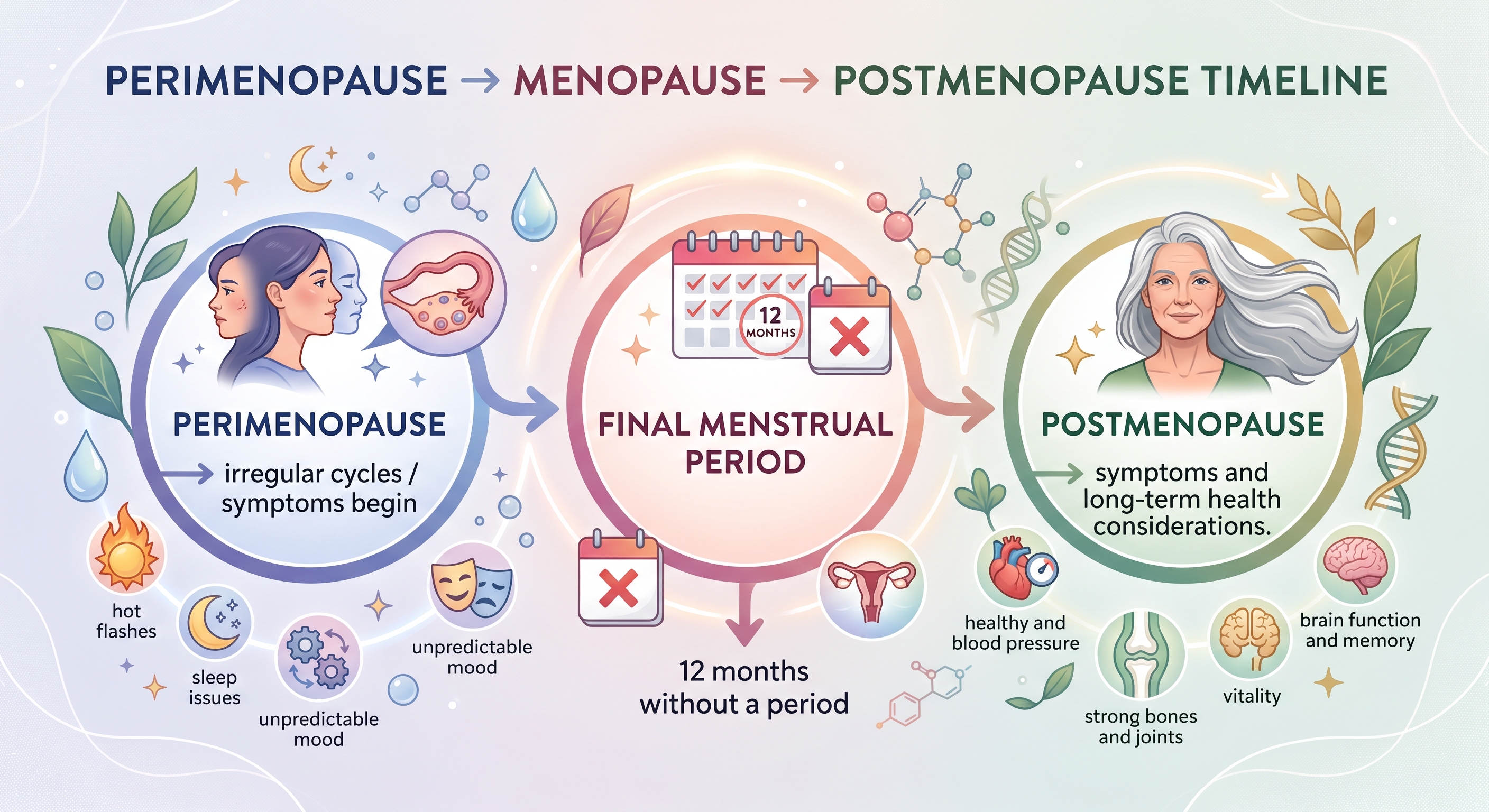
Use your symptom pattern, cycle history, age, and overall health context—not a single assumption—to understand where you are and what may help next.
The goal is not to chase a laboratory number. It is to determine what is causing your symptoms and which treatment has the best benefit-risk balance for you.
Hormone therapy is one tool—not the only tool. The appropriate route, dose, and medication depend on your symptoms, medical history, whether you have a uterus, and your individual risk profile.
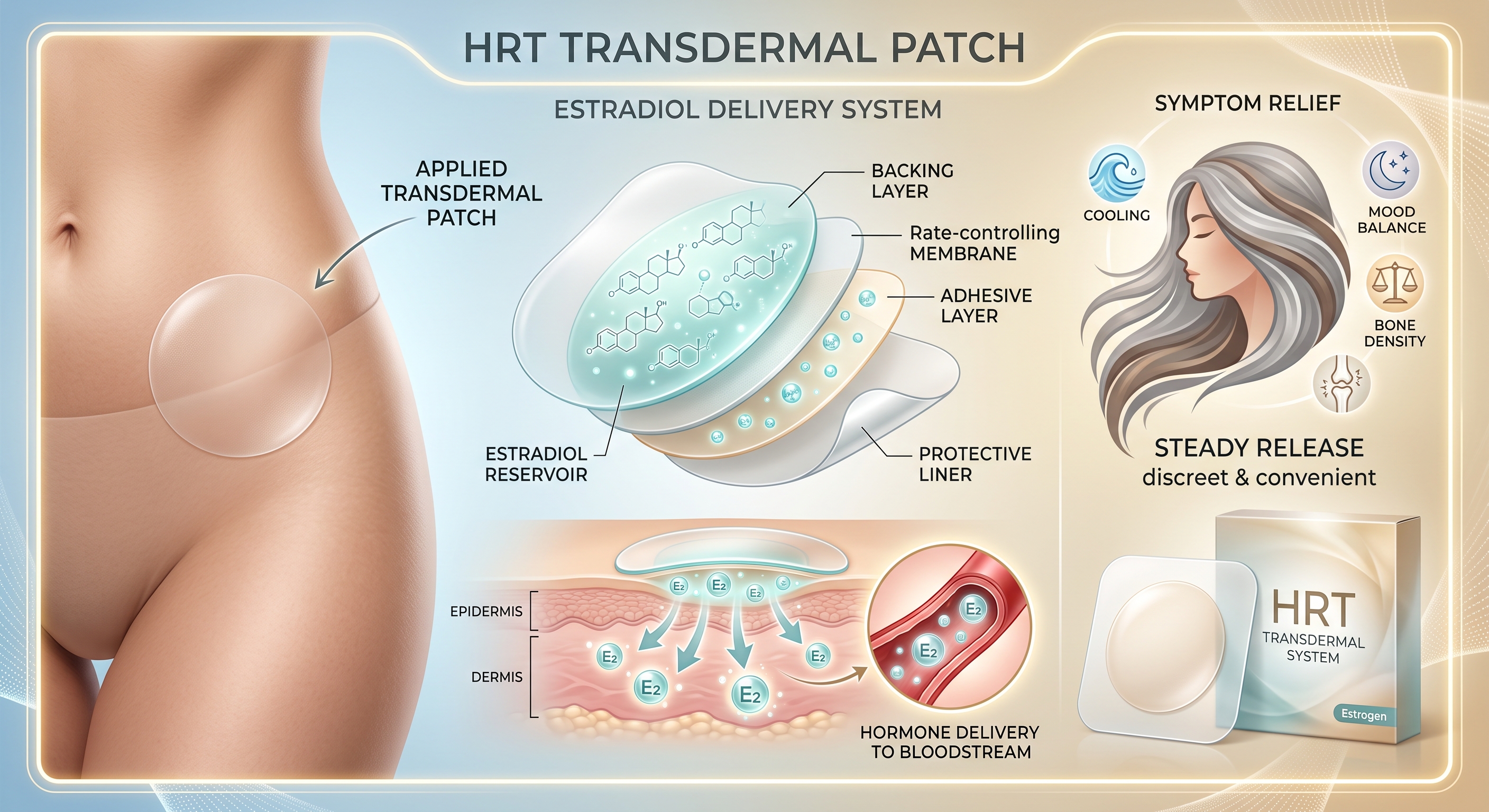
For appropriate patients with bothersome vasomotor symptoms, route and dose are individualized.
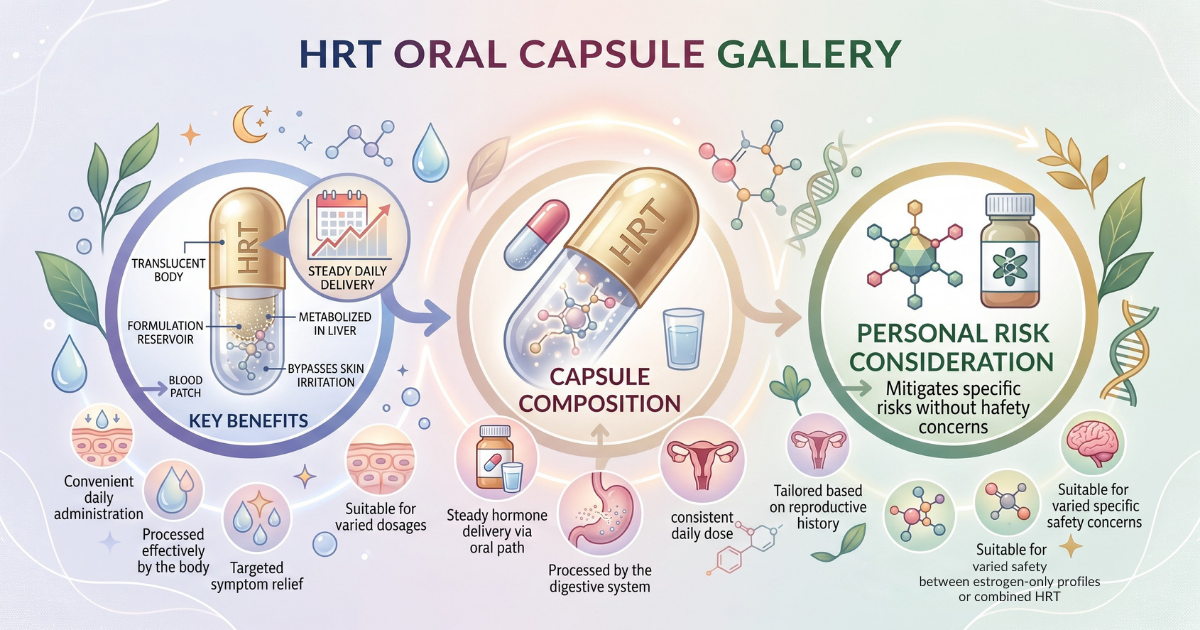
Some patients may benefit from oral medication, but route choice depends on symptom goals and risk factors.
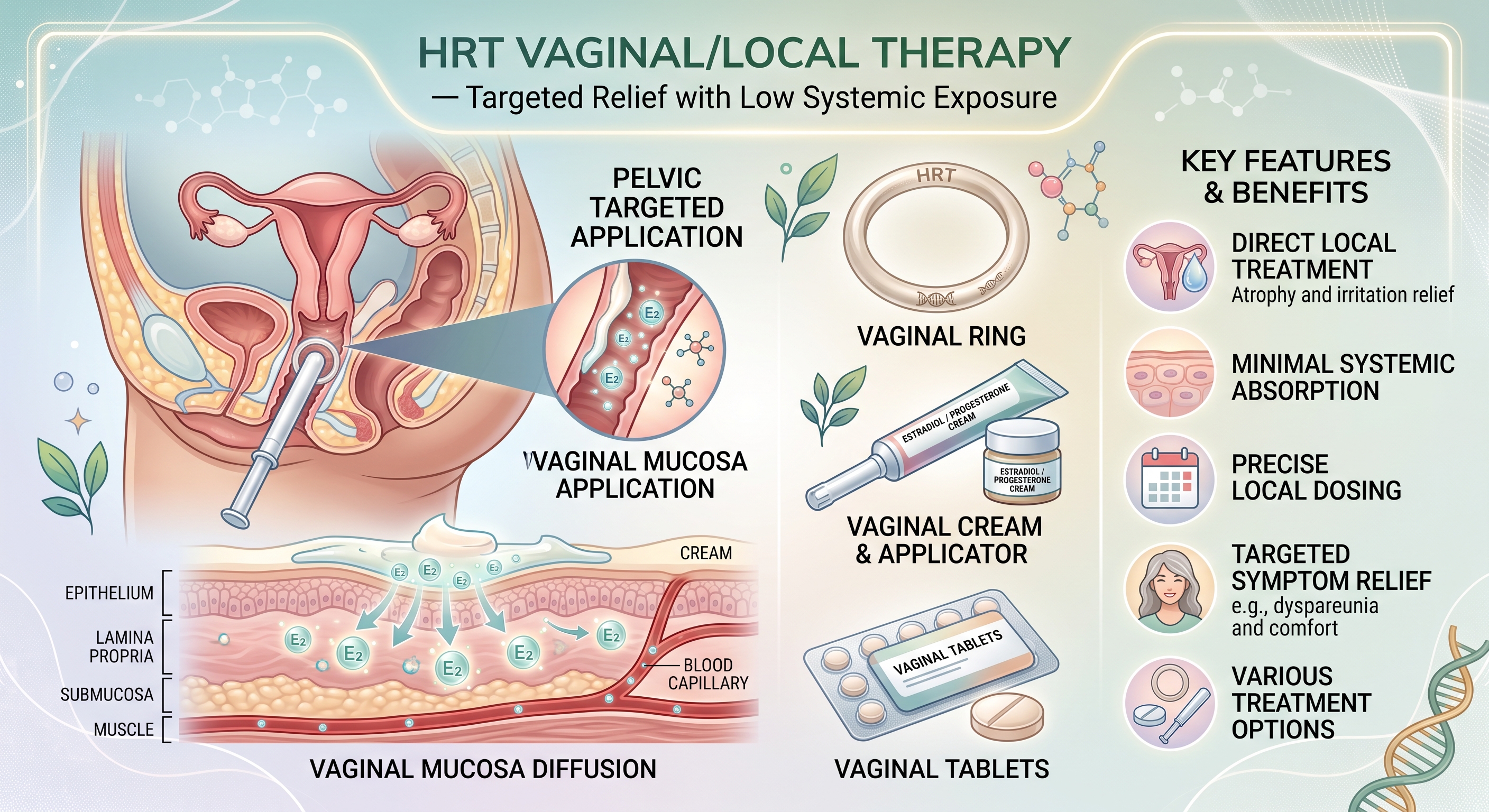
Genitourinary symptoms may respond to local therapy that is different from systemic treatment.
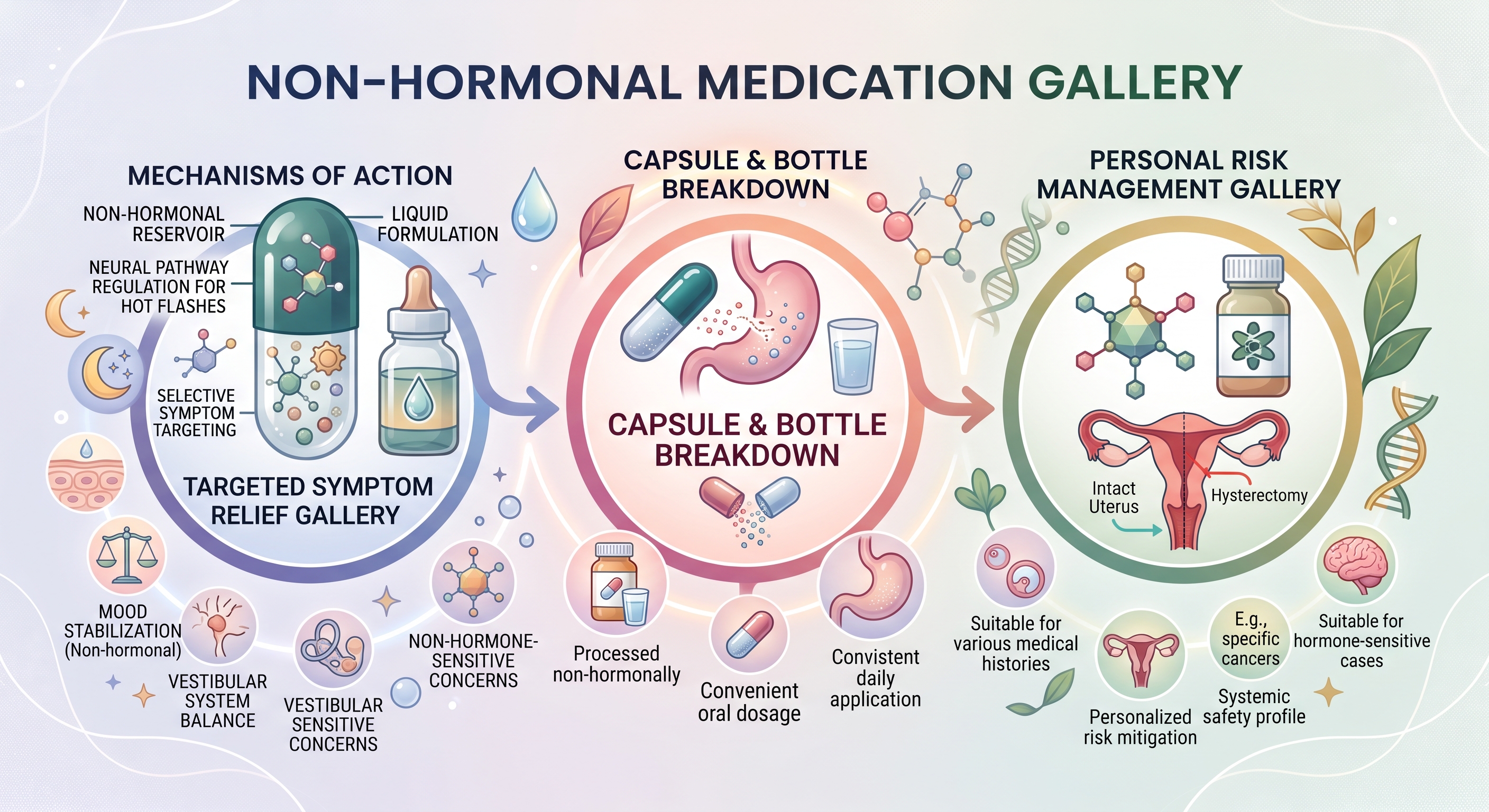
When systemic hormone therapy is not desired or appropriate, other evidence-based options may be considered.
The better question is whether a specific treatment is appropriate for a specific woman. Benefit and risk depend on factors such as age, time since menopause, symptoms, route, dose, uterus status, medical history, and contraindications.
The early Women’s Health Initiative results changed practice dramatically, but they should not be reduced to “all hormone therapy is dangerous.” Modern decision-making is individualized rather than based on one blanket rule.
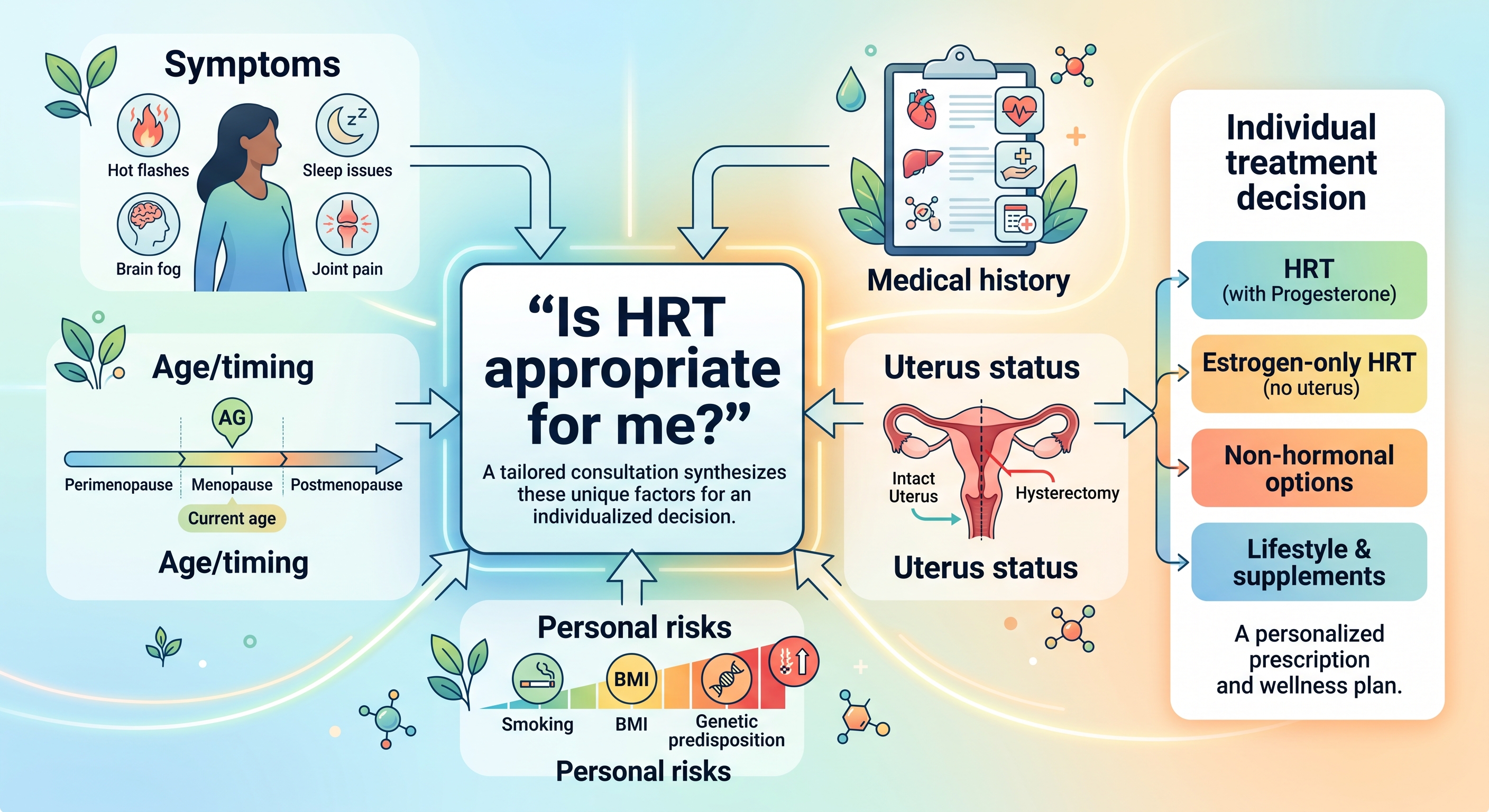
The consultation turns a frightening headline into a personalized medical decision based on your symptoms, timing, and risk profile.
Menopause is often diagnosed clinically from age, symptoms, and menstrual history. Laboratory testing can still be valuable when the diagnosis is unclear, symptoms suggest another condition, or results may change treatment—but the goal is not to treat a lab number in isolation.
Four straightforward steps designed to reduce uncertainty and keep the medical decision individualized.
Share symptoms, cycle history, medications, relevant health history, prior treatment, and your goals.
Review your symptoms and risk factors and identify whether additional testing or in-person evaluation is needed.
Discuss hormone therapy, local treatment, non-hormonal options, lifestyle factors, and expected benefits and limitations.
The plan may include treatment, testing, referral, monitoring, or deciding that medication is not needed.
The consultation is for physician evaluation and treatment planning. Medication, laboratory testing, imaging, and outside services are separate when needed.
Telemedicine can be an excellent starting point for many menopause concerns, but some symptoms need urgent, in-person, gynecologic, or other specialist evaluation.
Clear answers to the questions that often stop women from seeking help.
Bring the symptoms that are affecting your life, your medical history, and any previous hormone treatment. Your physician will help determine whether menopause is the likely explanation, whether hormone therapy may fit, what risks matter in your case, and what alternatives you have.