
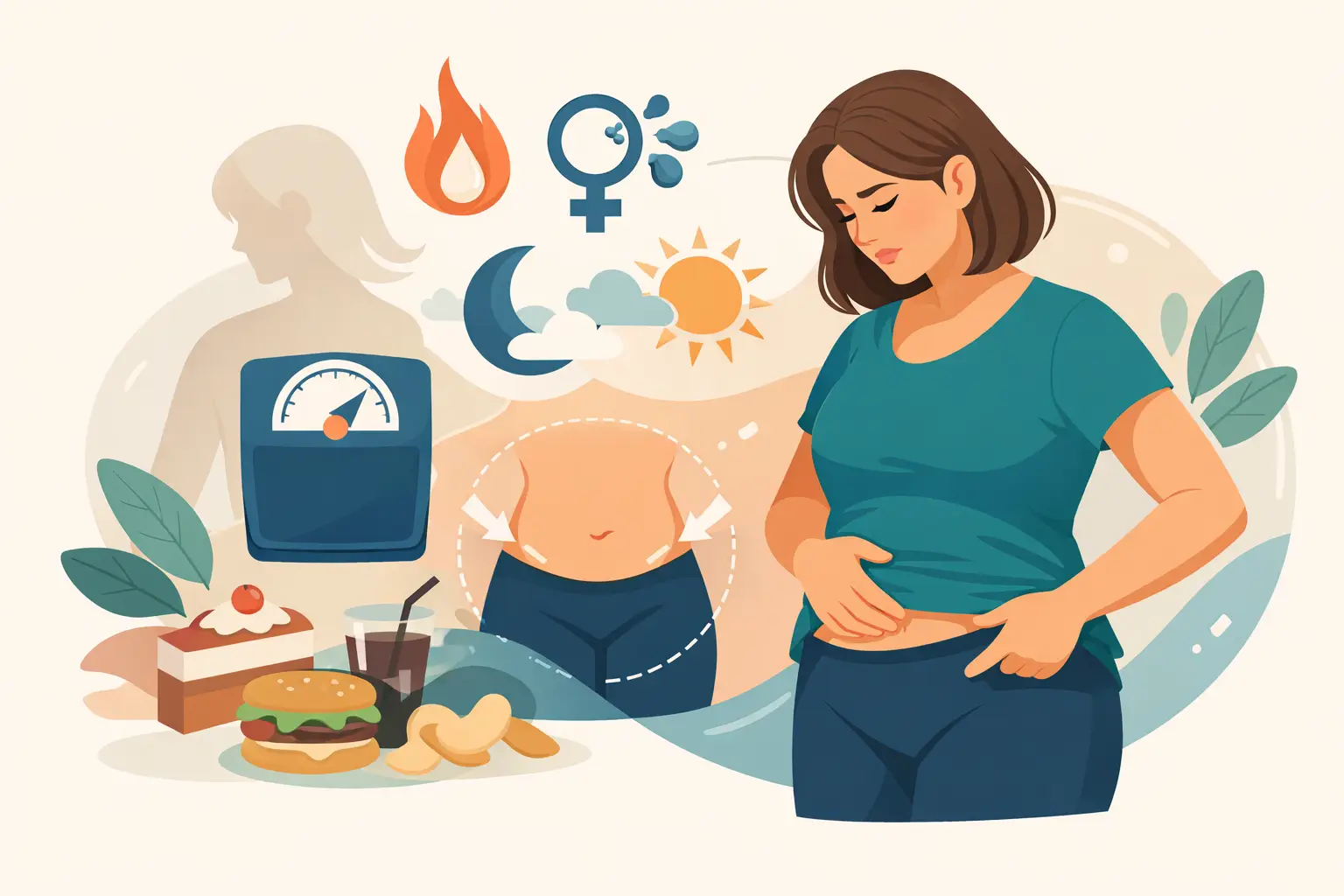
Your eating habits may not have changed much, but your body has. That is often the moment women ask, why am I gaining weight in menopause when I am doing the same things I have always done? It is a fair question, and the answer is usually not a lack of discipline. Menopause changes how your body stores fat, uses energy, responds to insulin, builds muscle, and recovers from stress.
For many women, the most frustrating part is that the old rules stop working. You may be exercising, eating reasonably well, and still notice more weight around the midsection, more bloating, and less flexibility in your metabolism. That is not imagined. It reflects real physiologic shifts that deserve a medical explanation, not generic advice to simply eat less and move more.
Why am I gaining weight in menopause if my routine is the same?
The short answer is that menopause affects several systems at once. Estrogen levels decline, and that has downstream effects on fat distribution, insulin sensitivity, inflammation, sleep quality, appetite signaling, and body composition. At the same time, age-related muscle loss makes your resting metabolic rate lower than it was in your 30s or 40s.
This is why menopause-related weight gain often feels different from earlier weight changes. It is not just a number on the scale. Many women notice that fat shifts toward the abdomen, clothes fit differently, and recovery from exercise becomes harder. The body becomes metabolically less forgiving.
There is also individual variation. Some women gain very little weight overall but develop more central abdominal fat. Others gain steadily over several years. Genetics, baseline insulin resistance, sleep patterns, stress load, medications, alcohol intake, thyroid function, and activity level all matter. Menopause is a major driver, but it is rarely the only factor.
The hormone changes behind menopause weight gain
Estrogen plays a larger role in metabolism than many people realize. When estrogen declines, the body is more likely to store fat viscerally, meaning deeper abdominal fat around the organs. This pattern is more strongly associated with insulin resistance, fatty liver, inflammation, and cardiometabolic risk than fat stored in the hips or thighs.
Lower estrogen can also influence how the brain regulates hunger and fullness. Some women notice stronger cravings, especially for carbohydrates, or a reduced sense of satiety after meals. That does not mean menopause automatically causes overeating, but it can make appetite control feel less predictable.
Testosterone and progesterone shifts can add to the picture. Progesterone changes may affect sleep and fluid retention. Lower testosterone can contribute to reduced muscle mass, lower energy, and decreased exercise capacity in some women. Hormones do not act in isolation, which is why broad hormone discussions often miss the real issue. What matters is how these changes affect your metabolism in daily life.
Insulin resistance often becomes more visible
One of the most common reasons women gain weight in midlife is worsening insulin resistance. This can happen gradually and may become more obvious during perimenopause and menopause. If your cells are less responsive to insulin, your body has a harder time managing blood sugar efficiently and is more likely to store excess energy as fat.
This is one reason some women feel hungrier, crash after meals, or gain abdominal weight even when calorie intake does not seem excessive. Insulin resistance also overlaps with fatigue, brain fog, elevated triglycerides, prediabetes, and metabolic syndrome. In other words, the weight gain may be one visible sign of a broader metabolic shift.
Muscle loss quietly lowers calorie burn
Starting in midlife, many adults lose muscle mass unless they actively work to preserve it. Muscle is metabolically active tissue, so losing it reduces the number of calories your body burns at rest. The change can be gradual enough to go unnoticed until weight starts creeping up.
This is one reason cardio alone is often not enough in menopause. If muscle mass is declining, preserving or rebuilding it becomes central to weight management. The goal is not just burning calories during a workout. It is maintaining a body composition that supports better glucose control, strength, mobility, and long-term metabolic health.
Sleep, stress, and cortisol are not side issues
If you are waking up at 3 a.m., sweating through the night, or feeling wired and exhausted at the same time, those symptoms can absolutely affect your weight. Sleep disruption is extremely common in menopause and has measurable effects on appetite hormones, insulin sensitivity, recovery, and food choices the next day.
Poor sleep tends to raise hunger and reduce impulse control around food. It can also reduce motivation to exercise and worsen fatigue, which lowers total daily movement. Over time, that creates a real metabolic disadvantage.
Stress matters too, but not in a vague wellness way. Chronic stress can increase cortisol exposure, which may contribute to abdominal fat gain, higher blood sugar, and disrupted sleep. Stress can also make it harder to stay consistent with meal timing, exercise, and recovery. When women feel like their body is working against them, stress often becomes part of the cycle.
Other medical reasons the scale may be moving
Menopause may be the main factor, but it should not be the only explanation considered. Thyroid dysfunction, certain antidepressants, steroids, insulin, antihistamines, and some blood pressure medications can contribute to weight gain. So can untreated sleep apnea, depression, reduced physical activity from joint pain, and significant gut symptoms that affect eating patterns and inflammation.
This is where a physician-guided approach matters. If someone is told all weight gain is just age or hormones, important contributors can be missed. A more complete assessment may include metabolic labs, fasting glucose or A1c, lipids, thyroid markers, liver enzymes, body composition trends, medication review, sleep symptoms, and a discussion of how symptoms started.
What actually helps with menopause weight gain?
The most effective strategy depends on what is driving the gain. That is why generic plans often fail. If insulin resistance is central, the plan needs to address insulin resistance. If sleep is severely disrupted, that has to be treated. If muscle loss is significant, exercise has to be structured around strength, not just calorie burn.
Nutrition still matters, but the focus should be practical and metabolically smart. Many women do better with adequate protein, less ultra-processed food, improved fiber intake, and more stable meal patterns that reduce glucose spikes and crashes. Extreme restriction usually backfires, especially when sleep is poor and stress is high.
Exercise should support muscle preservation and insulin sensitivity. Resistance training is especially useful in menopause, along with regular walking and cardiovascular work that is sustainable. More is not always better. Overtraining in a fatigued, under-recovered body can worsen symptoms for some women.
For women with significant metabolic dysfunction, physician-guided treatment may include evaluation for hormone-related issues, targeted nutrition strategies, sleep optimization, and medical weight loss support when appropriate. In some cases, GLP-1 medications or other evidence-based options can help, but they work best when used within a real clinical plan with follow-up and monitoring.
Why am I gaining weight in menopause even when I eat healthy?
Because healthy eating alone does not always correct the underlying physiology. You can eat well and still struggle if your body is more insulin resistant, your sleep is fragmented, your muscle mass is declining, or your hormones are shifting fat storage toward the abdomen. The problem is not that healthy eating does not matter. It is that it may not be enough on its own.
That is also why two women can follow similar routines and get very different results. One may have minimal insulin resistance and sleep well. Another may be dealing with hot flashes, early waking, low muscle mass, elevated blood sugar, and high stress. Menopause is not one experience, and treatment should not be one-size-fits-all.
A serious medical approach looks at the full picture instead of blaming willpower. At Text2MD, that means board-certified physician oversight, lab-informed decision-making, and continuity of care instead of one-off advice.
If your body feels unfamiliar right now, that does not mean you are failing. It means your metabolism may need a different strategy than it did a decade ago. The right next step is not more self-blame. It is getting clear on what has changed, so your plan can finally match the biology you are living in.