
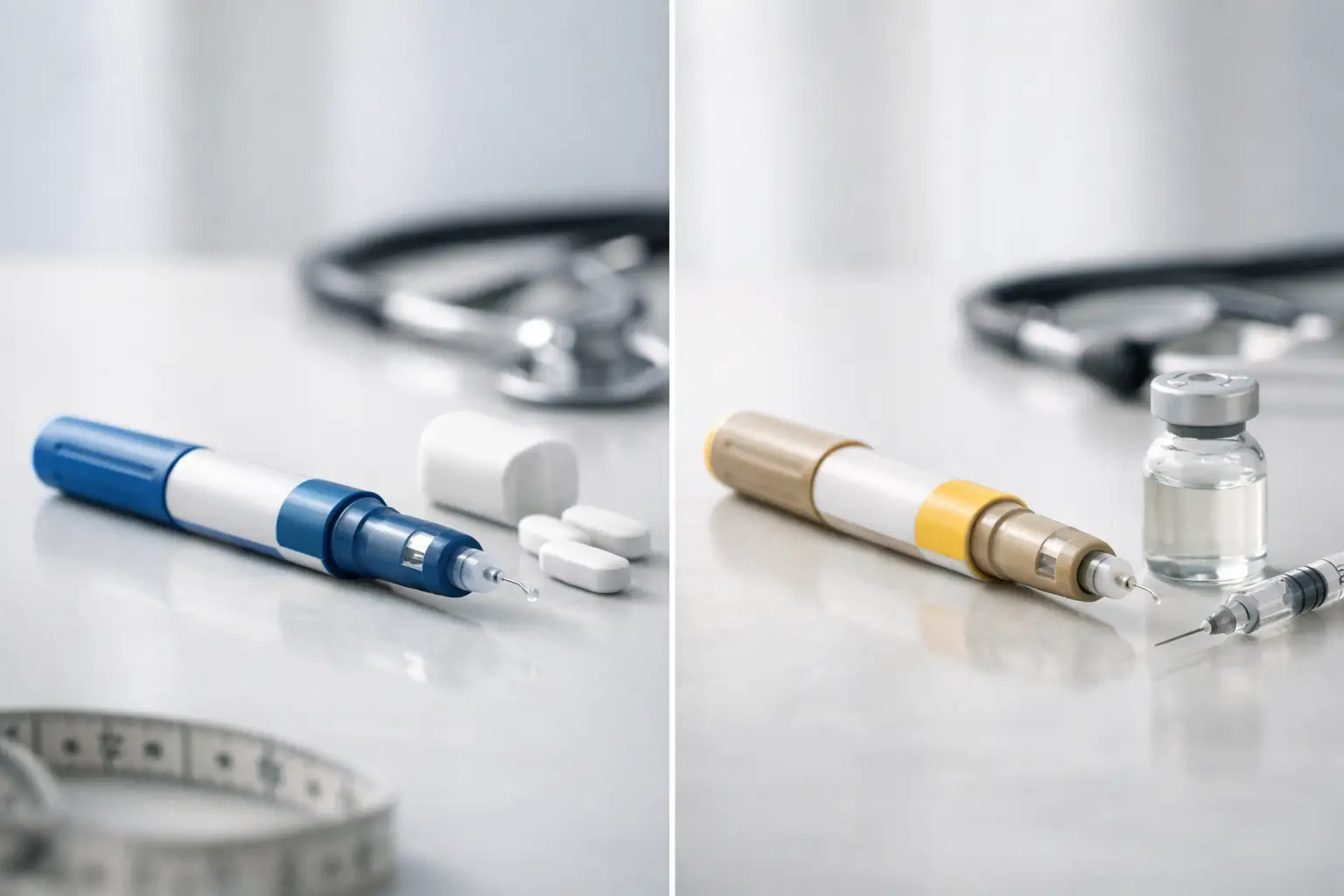
If you are comparing semaglutide vs tirzepatide weight loss, you are probably not looking for hype. You want to know which medication may work better, what the trade-offs are, and whether one makes more sense for your body, your labs, and your long-term health goals. That is the right question, because these medications are not interchangeable for every patient.
Both semaglutide and tirzepatide are prescription medications used in physician-guided weight loss care. Both can reduce appetite, improve satiety, and help patients create a calorie deficit without relying on willpower alone. But they are not identical, and the differences matter when you are dealing with insulin resistance, menopause-related weight gain, metabolic syndrome, prediabetes, or a long history of failed dieting.
Semaglutide vs tirzepatide weight loss: what is the difference?
Semaglutide is a GLP-1 receptor agonist. It works by slowing stomach emptying, increasing feelings of fullness, and helping regulate appetite and blood sugar. Tirzepatide works on GLP-1 as well, but it also activates GIP receptors. That dual action is one reason tirzepatide has drawn so much attention in medical weight loss.
From a practical standpoint, patients usually experience both medications as appetite-lowering tools that make it easier to eat less and stay consistent. The difference is that tirzepatide may produce greater average weight loss in some patients, especially those with significant insulin resistance or type 2 diabetes. That does not automatically make it the better choice for everyone.
The right medication depends on more than the headline number. Tolerability, cost, access, underlying metabolic health, gastrointestinal symptoms, and how your body responds over time all matter.
Which tends to produce more weight loss?
On average, tirzepatide has shown greater weight loss than semaglutide in clinical trials. That is the clean answer most people want. But real clinical care is rarely that simple.
Some patients lose substantial weight with semaglutide and do very well for months or years. Others hit a plateau, struggle with side effects, or feel that appetite control is incomplete. Tirzepatide may offer stronger appetite suppression and better metabolic improvement for certain patients, but stronger is not always smoother. Some people tolerate semaglutide better, and consistency often matters more than choosing the most aggressive option on paper.
Weight loss outcomes also depend on dose titration, nutrition, protein intake, sleep, stress, hormone shifts, activity level, and whether the patient has underlying issues such as thyroid dysfunction, insulin resistance, or menopause-related body composition changes. A medication can help, but it does not erase the biology driving weight gain.
Why this comparison matters for midlife metabolic health
For many adults, especially midlife women, weight gain is not just about eating too much. Hormonal changes can alter appetite, insulin sensitivity, body composition, and fat distribution. Sleep disruption, increased inflammation, changing estrogen levels, and loss of lean muscle can all push metabolism in the wrong direction.
That is one reason the semaglutide vs tirzepatide weight loss question should not be reduced to a social media debate. If a patient has central weight gain, elevated fasting insulin, rising A1C, fatigue, and difficulty losing weight despite reasonable habits, the choice of medication should fit the larger metabolic picture.
This is where physician-guided care matters. The goal is not just a lower number on the scale. The goal is better metabolic function, preserved muscle mass, improved energy, and a plan you can sustain.
Side effects: similar, but not always equal
Both medications commonly cause nausea, constipation, diarrhea, reflux, bloating, or reduced appetite to the point that eating enough protein becomes difficult. These effects often show up during dose increases and may improve with time, but not always.
Semaglutide and tirzepatide share many of the same gastrointestinal side effects because both act on gut-brain signaling and gastric emptying. Tirzepatide may feel more potent for some patients, which can be helpful when appetite is a major barrier, but it can also mean a rougher adjustment period in certain cases.
A patient with a sensitive GI tract, existing reflux, or a history of trouble tolerating medications may do better with a slower, highly individualized titration. That is another reason generic, one-size-fits-all online prescribing often falls short. Dose progression should be based on response, side effects, and clinical judgment, not an automated schedule.
Cost, coverage, and access can change the decision
In the real world, the best medication is sometimes the one a patient can consistently obtain and afford. Insurance coverage varies widely. Formularies change. Prior authorizations can be difficult. Out-of-pocket pricing may differ significantly depending on the product, indication, and availability.
That means a medication can be clinically appealing and still not be the right starting point if access is unreliable. Stopping and restarting because of cost or shortages can interfere with progress and make side effects worse during re-titration.
This is where honest physician guidance matters. The right plan has to be medically sound and realistic. There is no value in prescribing the ideal option on paper if the patient cannot stay on it.
Who may be a better fit for semaglutide?
Semaglutide may be a strong choice for patients who want a well-established GLP-1 option with meaningful weight loss potential and a simpler decision framework. It can be a very reasonable starting point for someone who needs appetite control, has prediabetes or insulin resistance, and wants a medication with substantial real-world use.
It may also make sense for patients who prefer to start with a single-incretin medication before considering something more aggressive. In practice, some patients do exceptionally well on semaglutide and never need to switch.
That said, if weight loss is modest despite adherence, or if metabolic markers are not improving as expected, reassessment is appropriate. Staying on the wrong medication too long can be as unhelpful as stopping too early.
Who may be a better fit for tirzepatide?
Tirzepatide may be especially appealing for patients with more severe obesity, stronger insulin resistance, type 2 diabetes, or prior inadequate response to another GLP-1 medication. In some cases, it delivers stronger appetite reduction and more substantial body weight change.
It may also be worth discussing for patients who feel like their hunger signals are unusually difficult to control or who have a long history of cycling through diets with minimal lasting progress. But more effect can also mean more monitoring is needed. If food intake drops too sharply, patients can end up under-eating protein, losing muscle, or feeling depleted.
The best results usually come from pairing the medication with active physician follow-up, symptom review, and a plan that protects lean mass while improving metabolic health.
What patients often get wrong about GLP-1 weight loss treatment
The biggest mistake is assuming the medication itself is the entire plan. It is not. These medications can be powerful, but they work best inside a structured medical approach.
That means looking at labs, blood sugar trends, inflammation, thyroid status when appropriate, gut symptoms, sleep quality, and hormone shifts. It also means adjusting nutrition in a way the patient can sustain, not forcing a rigid diet that falls apart in three weeks.
Another common mistake is chasing the highest dose as quickly as possible. Higher is not automatically better. Some patients lose weight and feel well on lower doses. Others need a slower ramp because the side effects are otherwise too disruptive. Good care is not fast care. It is individualized care with real follow-up.
So which one is better?
If the question is strictly average weight loss, tirzepatide often comes out ahead. If the question is which medication is better for a specific patient, the answer depends.
It depends on your metabolic profile, your history of weight gain, your blood sugar, your GI tolerance, your access to medication, and your goals beyond the scale. It depends on whether you are trying to lose 20 pounds or manage long-standing obesity with insulin resistance and menopause-related body composition changes. It depends on whether your plan includes physician oversight or just a prescription.
For many patients, the most effective path is not choosing the trendier name. It is choosing the medication that fits their physiology and can be monitored over time by a board-certified physician who can adjust the plan as their body changes.
At Text2MD, that is the standard: physician-guided medical weight loss with real continuity, lab-informed decisions, and treatment plans built around the patient in front of us, not a script.
If you are weighing semaglutide against tirzepatide, look past the marketing. The better medication is the one that helps you improve your metabolic health safely, consistently, and with enough support to keep going when the easy answers run out.