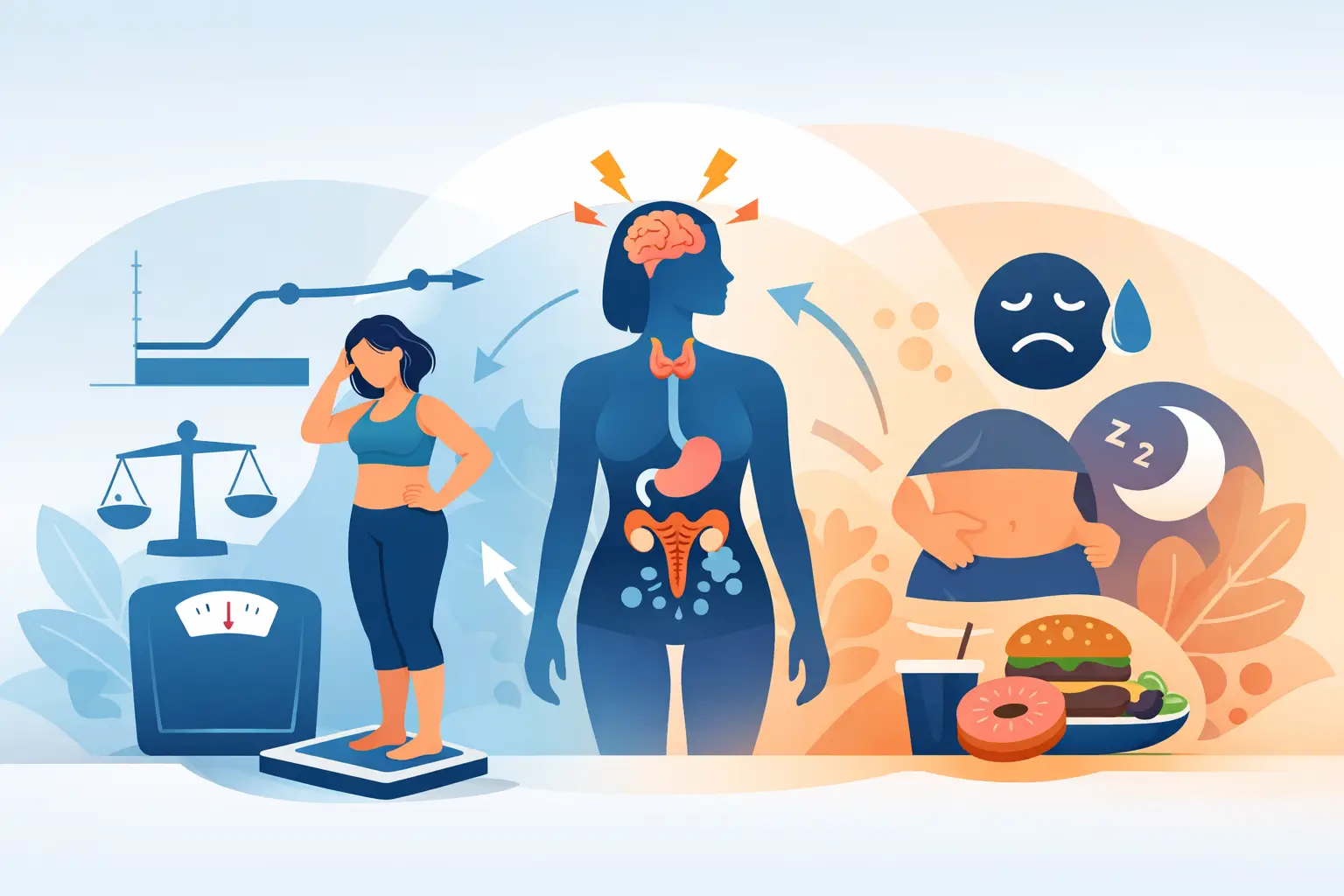
You are eating carefully, exercising consistently, and doing what used to work – but the scale has stopped moving. A weight loss plateau hormone imbalance pattern is one of the most common reasons this happens, especially in midlife, after chronic stress, or alongside symptoms like fatigue, poor sleep, cravings, and stubborn abdominal weight.
That does not mean every plateau is hormonal. Sometimes calories have crept up, activity has dropped, or your body has adapted to a lower weight. But when a plateau shows up with other metabolic symptoms, it deserves a closer look. This is where generic diet advice usually falls short. The real question is not just why weight loss slowed, but what changed in your physiology.
When a weight loss plateau hormone imbalance is more than a guess
A true plateau is not a bad week or a temporary fluctuation from sodium, menstrual cycle changes, constipation, or travel. It usually means your weight has remained stable for several weeks despite consistent effort. If that stall comes with brain fog, low energy, worsening sleep, reduced muscle mass, hot flashes, irregular periods, low libido, or increased hunger, hormones may be part of the picture.
Hormones influence how your body stores fat, uses glucose, builds muscle, regulates appetite, and responds to stress. They do not override physics, but they absolutely affect the conditions under which weight loss becomes harder. That is why two people can follow similar habits and get very different results.
For many patients, the issue is not a single hormone acting alone. It is a cluster of metabolic signals pushing in the wrong direction at the same time. Insulin resistance, cortisol disruption, thyroid dysfunction, sex hormone shifts, and poor sleep can all overlap. In that setting, trying harder often feels like failure, even when the real problem is that the strategy no longer matches the biology.
The most common hormone-related reasons progress stalls
Insulin is often the first place to look, especially if weight tends to collect around the midsection, energy crashes after meals, or cravings feel difficult to control. When insulin levels stay elevated, the body is more likely to store energy and less likely to access fat efficiently. This can happen years before someone is diagnosed with diabetes.
Thyroid function is another major factor. An underactive thyroid can slow metabolic rate, worsen fatigue, contribute to constipation, and make exercise recovery harder. Not every person with a plateau has thyroid disease, but when symptoms line up, testing matters.
Cortisol is more complicated than social media makes it sound. Stress does not automatically cause weight gain in every person. But chronic stress, poor sleep, overtraining, and irregular meal patterns can disrupt appetite, blood sugar regulation, and recovery. Some patients notice they are doing more and feeling worse – sleeping lightly, craving sugar, and holding onto abdominal fat despite intense effort.
Sex hormones also matter, particularly in perimenopause and menopause. Falling estrogen can change body fat distribution, insulin sensitivity, sleep quality, and muscle maintenance. Testosterone changes in both women and men can affect body composition, motivation, and recovery. Progesterone shifts may contribute to sleep disruption and cycle-related symptoms that make consistency harder.
These changes are real, but they are also manageable when approached medically instead of emotionally. The goal is not to blame hormones for everything. It is to identify whether they are creating resistance that needs targeted treatment.
Signs your plateau may be tied to hormone imbalance
The strongest clue is not the plateau alone. It is the plateau plus a pattern.
If you have persistent fatigue even with adequate sleep, that matters. If your sleep has become lighter, shorter, or more fragmented, that matters too. If you are gaining abdominal weight while losing muscle tone, dealing with constipation, feeling cold more often, noticing hair thinning, or experiencing cycle changes, these are not random details. They help point toward what should be evaluated.
Midlife women often describe a sudden shift: the same nutrition and exercise routine that worked for years stops working, recovery gets worse, sleep declines, and central weight gain appears. Men may describe lower drive, increased body fat, less strength, and reduced energy. In both groups, insulin resistance can quietly layer on top of hormonal change and make the plateau more entrenched.
This is also where self-diagnosis can go wrong. Symptoms overlap. Fatigue could reflect thyroid issues, iron deficiency, sleep apnea, insulin resistance, depression, or medication side effects. A medically guided evaluation helps separate trend from guesswork.
Why standard diet advice often fails during a hormone-related plateau
Most plateau advice starts with cutting more calories and adding more exercise. Sometimes that works. Sometimes it makes the problem worse.
If you are already under-eating, pushing calories even lower can increase fatigue, reduce training capacity, and make muscle loss more likely. If you are stressed and sleeping poorly, adding more high-intensity exercise may raise the burden on a system that is already struggling to recover. If insulin resistance is present, a general low-calorie plan without attention to protein, meal structure, and glucose response may not be enough.
This is why physician-guided care matters. A serious plateau is not just a motivation problem. It may be a signal that your treatment plan needs to account for metabolism, hormones, sleep, medications, and body composition rather than just willpower.
What a medical evaluation should include
A useful evaluation starts with history, not just a lab order. The timing of the plateau, changes in cycle or menopause status, stress levels, sleep, digestive symptoms, strength trends, medications, and prior weight loss attempts all provide context. Rapid advice without context is one reason so many patients feel dismissed.
Labs may include markers related to glucose metabolism, thyroid function, and hormone status depending on symptoms and age. In some cases, inflammatory markers, liver health, lipid patterns, or nutrient deficiencies also help explain why progress stalled. The key is not running every test available. The key is choosing the right tests for the patient in front of you.
That distinction matters. Hormones should not be treated based on social media symptom lists alone. They should be evaluated within the bigger metabolic picture. A board-certified physician can also determine whether symptoms point away from hormones and toward another issue that needs attention.
How treatment changes when hormones are involved
If insulin resistance is part of the problem, treatment may include nutrition changes designed around satiety, protein intake, blood sugar stability, and preservation of lean mass. Some patients also benefit from physician-guided medical weight loss, including GLP-1-based treatment when appropriate.
If thyroid dysfunction is confirmed, proper treatment can improve energy, bowel regularity, and metabolic efficiency. If perimenopause or menopause-related hormone shifts are driving symptoms, hormone evaluation may open the door to more targeted support. The goal is not simply to move the scale. It is to improve the physiology behind the plateau.
Exercise strategy often needs adjustment too. More is not always better. Resistance training, recovery, walking, protein intake, and sleep quality may matter more than punishing cardio sessions. For patients with high stress load or poor recovery, the smartest program often looks more measured, not more extreme.
This is also where continuity matters. A one-time consult can identify problems, but a plateau that developed over months rarely resolves with one conversation. Follow-up allows treatment to be adjusted based on symptoms, labs, medication response, and real-world adherence. That is the difference between real medical care and a generic online weight-loss funnel.
The goal is not faster weight loss. It is less resistance.
Patients often come in thinking they need more discipline. In many cases, they need a more accurate explanation. A weight loss plateau hormone imbalance issue does not mean your body is broken. It means there may be a treatable barrier that diet apps and calorie calculators cannot see.
If your progress has stalled and the stall comes with fatigue, poor sleep, cravings, cycle changes, abdominal weight gain, or signs of insulin resistance, it is reasonable to stop guessing. A physician-led, lab-informed review can identify whether the plateau is behavioral, hormonal, metabolic, or some combination of all three. At Text2MD, that kind of evaluation is built around direct physician access, individualized follow-up, and treatment that changes with your body instead of working against it.
You should not have to choose between being told everything is normal and being sold a one-size-fits-all program. When the pattern is real, the right next step is a real medical assessment – and that can be the turning point that makes progress possible again.