If climbing stairs leaves you more winded than it used to, your VO2 max may be telling you something useful. Learning how to improve VO2 max is not only for competitive athletes. This measure of aerobic capacity can reflect how efficiently your heart, lungs, blood vessels, and working muscles use oxygen under stress. For adults focused on metabolic health, energy, healthy aging, or sustainable body-composition change, improving it can be a meaningful objective.
The right approach is rarely to train harder every day. VO2 max improves when the training signal is strong enough, recovery is adequate, and underlying barriers such as insulin resistance, anemia, poor sleep, medication effects, or untreated cardiovascular risk are not ignored. A wearable can provide a useful estimate, but it should not replace a clinical view of your overall health.
What VO2 Max Measures and Why It Matters
VO2 max is the maximum amount of oxygen your body can use during intense exercise. It is commonly expressed in milliliters of oxygen per kilogram of body weight per minute. A higher number generally indicates better cardiorespiratory fitness, although the right target depends on age, sex, body size, training background, and medical history.
This is more than a performance metric. Cardiorespiratory fitness is strongly associated with long-term health outcomes. Better aerobic capacity can support blood sugar regulation, blood pressure control, mitochondrial function, exercise tolerance, recovery, and the ability to remain active through midlife and beyond.
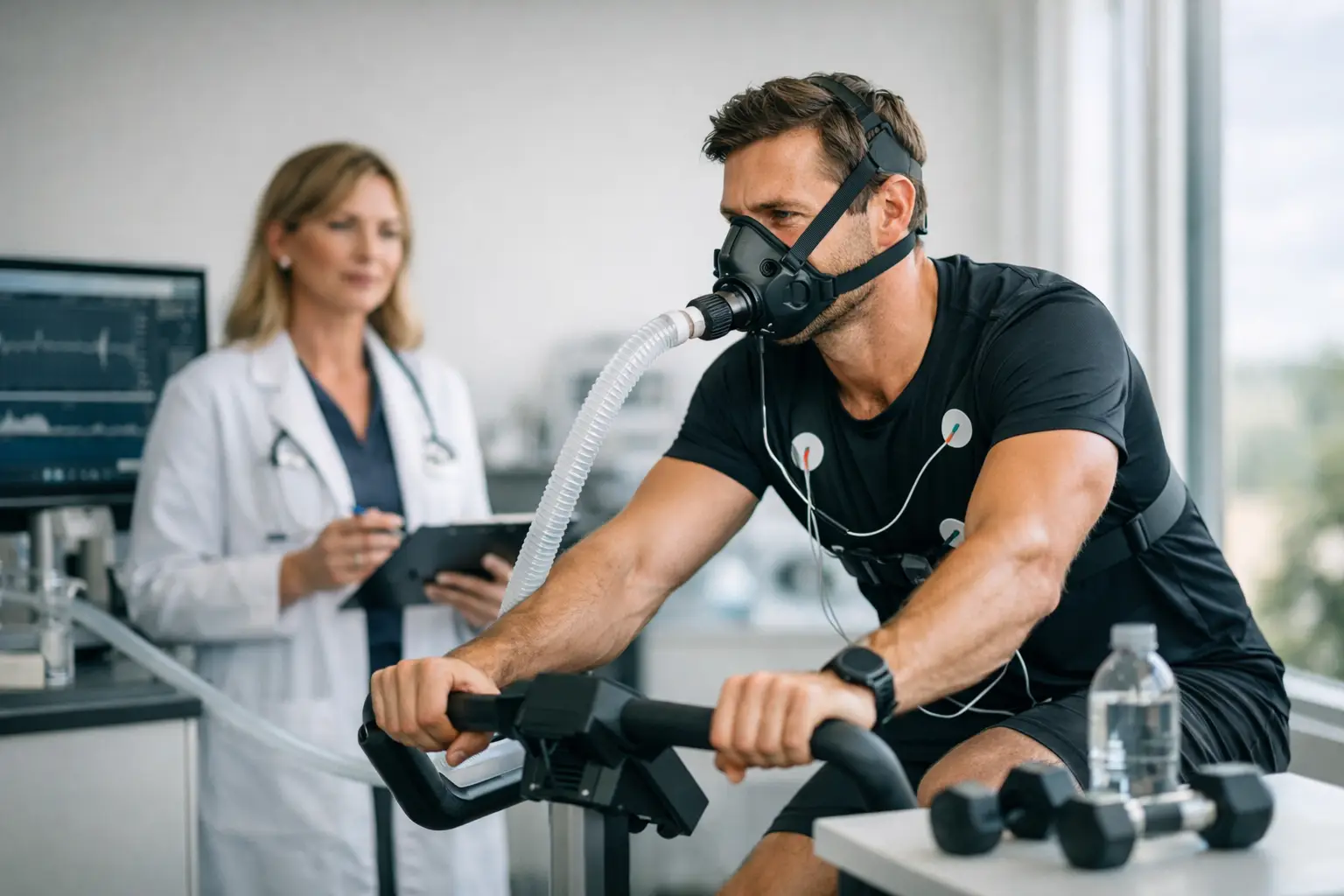
Still, a single number does not define your health. Wearable estimates can shift with heat, hydration, heart rate accuracy, body weight changes, and the type of activity recorded. Trends over several months are usually more valuable than reacting to one reading. If you want a precise measurement, a supervised cardiopulmonary exercise test is the clinical standard.
How to Improve VO2 Max: Build the Foundation First
Many people respond to a fitness plateau by adding more high-intensity sessions. That can work temporarily, but it often creates a cycle of fatigue, soreness, skipped workouts, and stalled progress. A better plan starts with regular aerobic work at a manageable intensity.
For most adults, this means two to four weekly sessions of steady cardio, such as brisk walking on an incline, cycling, jogging, rowing, swimming, or using an elliptical. The exact mode matters less than consistency and joint tolerance. Start with 20 to 40 minutes per session and increase gradually as your conditioning improves.
A practical intensity check is the talk test. During easy-to-moderate aerobic work, you should be able to speak in short sentences without gasping. This level is often called Zone 2, though heart-rate zones calculated by a device are estimates, not absolute prescriptions. People taking beta blockers, for example, may not be able to use standard heart-rate formulas reliably.
This foundational work builds stroke volume, capillary density, and mitochondrial capacity. In plain terms, it helps your body move and use oxygen more efficiently before you ask it to perform near its limit. It also creates the recovery capacity needed for harder sessions later.
Add Intervals With Intention, Not Punishment
Once you have a reliable aerobic routine, intervals are one of the most time-efficient ways to raise VO2 max. They involve repeated periods of challenging work separated by enough recovery to maintain quality. The goal is not to finish completely depleted. The goal is to accumulate time at a demanding, repeatable effort.
A simple starting session is a 10-minute warm-up, followed by four rounds of two minutes at a hard but controlled pace and two to three minutes easy. Finish with a cooldown. As fitness improves, you might progress to four rounds of four minutes hard with three minutes easy, one of the best-studied interval formats for aerobic adaptation.
Hard should mean you are breathing heavily and can say only a few words, but your form remains controlled. On a bike, that may be a strong resistance and cadence you can sustain. While running, it may be closer to a fast 5K effort than an all-out sprint. The appropriate intensity depends on your current fitness, injury history, and health status.
One interval session per week is enough for many beginners. Two can be appropriate for experienced exercisers who are recovering well. More is not automatically better. If sleep worsens, resting heart rate rises, legs remain unusually heavy, or motivation drops for days, reduce intensity or volume before adding more.
Strength Training Supports Aerobic Progress
Strength training does not replace aerobic exercise, but it can make aerobic work more effective. Stronger legs and hips improve movement economy, while better muscle mass supports glucose disposal and metabolic health. This matters especially for adults losing weight, managing insulin resistance, or navigating age-related loss of muscle.
Aim for two full-body strength sessions weekly, with emphasis on movements that fit your ability and equipment: squats or sit-to-stands, hinges, presses, rows, step-ups, carries, and calf work. You do not need to train to failure every session. Good technique, gradual progression, and enough protein and recovery are more useful than leaving the gym exhausted.
Strength work also helps preserve lean mass during weight loss. That is clinically relevant because rapid weight loss without resistance training, adequate protein, and medical oversight can reduce lean tissue and make maintaining an active lifestyle harder.
Recovery Is Part of the Prescription
VO2 max improves between workouts, not during them. Sleep, nutrition, hydration, and stress management determine whether training becomes an adaptation or simply another physiologic stressor.
Most adults benefit from a predictable weekly rhythm: easy aerobic sessions, one or two challenging sessions, strength training, and at least one lower-demand day. High-intensity training and heavy lower-body lifting may need to be separated when possible, particularly if you are newer to exercise or returning after a long break.
Fueling matters as well. Under-eating may seem compatible with aggressive weight-loss goals, but chronic low energy availability can impair training quality, recovery, hormones, and lean-mass retention. A physician-guided plan can help align calorie intake, protein targets, medications, and exercise demands without relying on generic rules.
Address the Medical Reasons Fitness May Feel Harder
A sudden decline in exercise tolerance deserves attention, especially if it comes with chest pressure, fainting, unusual shortness of breath, palpitations, leg swelling, or dizziness. Stop exercising and seek prompt medical evaluation for concerning symptoms.
Less dramatic barriers can matter too. Iron deficiency, anemia, thyroid dysfunction, uncontrolled blood pressure, sleep apnea, poorly controlled diabetes, chronic inflammation, menopause-related sleep disruption, low testosterone in appropriate patients, and medication side effects may all affect energy, recovery, or perceived exertion. Not every fatigue problem is a motivation problem, and not every plateau is solved with another workout plan.
For patients using GLP-1 medications or pursuing medical weight management, exercise programming should be individualized. As body weight declines, relative VO2 max may rise even before endurance improves substantially. At the same time, nausea, reduced appetite, dehydration, and inadequate protein intake can limit training. Real follow-up and objective lab monitoring help identify what is helping and what needs adjustment.
A Practical Eight-Week Starting Framework
If you are currently inactive, begin with walking or another low-impact option rather than forcing intense intervals. In weeks one and two, complete three 20- to 30-minute easy sessions and two brief strength sessions. In weeks three and four, add five to 10 minutes to one or two aerobic sessions.
During weeks five and six, introduce one interval workout using short, controlled efforts. Keep your other cardio sessions easy. In weeks seven and eight, either add one interval round, slightly lengthen the hard efforts, or extend an easy session. Choose only one progression at a time.
Track a few useful data points: your workout duration, pace or power at a similar effort, resting heart rate trend, sleep quality, and how you feel the next day. If your wearable provides a VO2 max estimate, check the monthly direction rather than expecting a meaningful change after every workout.
The best VO2 max program is the one you can recover from and repeat. Start at a level that respects your current health, build capacity before chasing intensity, and get physician-guided evaluation when fatigue, metabolic concerns, hormone symptoms, or cardiovascular risk may be influencing the result.