A scale that has not moved in months is rarely the whole story. For many adults, weight gain or a stubborn plateau is tied to insulin resistance, medication effects, menopause or andropause, sleep disruption, chronic inflammation, stress, or an untreated metabolic condition. That is why telemedicine versus in-person obesity care is not simply a question of convenience. It is a question of whether the care model can identify what is driving the problem and support a plan that can last.
The right setting depends on your health history, the complexity of your symptoms, and the quality of the physician relationship. Virtual care can be highly effective for medical weight management when it includes comprehensive evaluation, appropriate laboratory monitoring, direct physician involvement, and real follow-up. In-person care remains essential in situations that require a hands-on exam, urgent assessment, or testing that cannot be completed remotely.
Telemedicine Versus In-Person Obesity Care: What Actually Changes?
The clinical goals should be the same in either setting: assess metabolic risk, identify contributing factors, create an individualized treatment plan, monitor safety, and adjust treatment based on measurable results. The meaningful difference is how those steps are delivered.
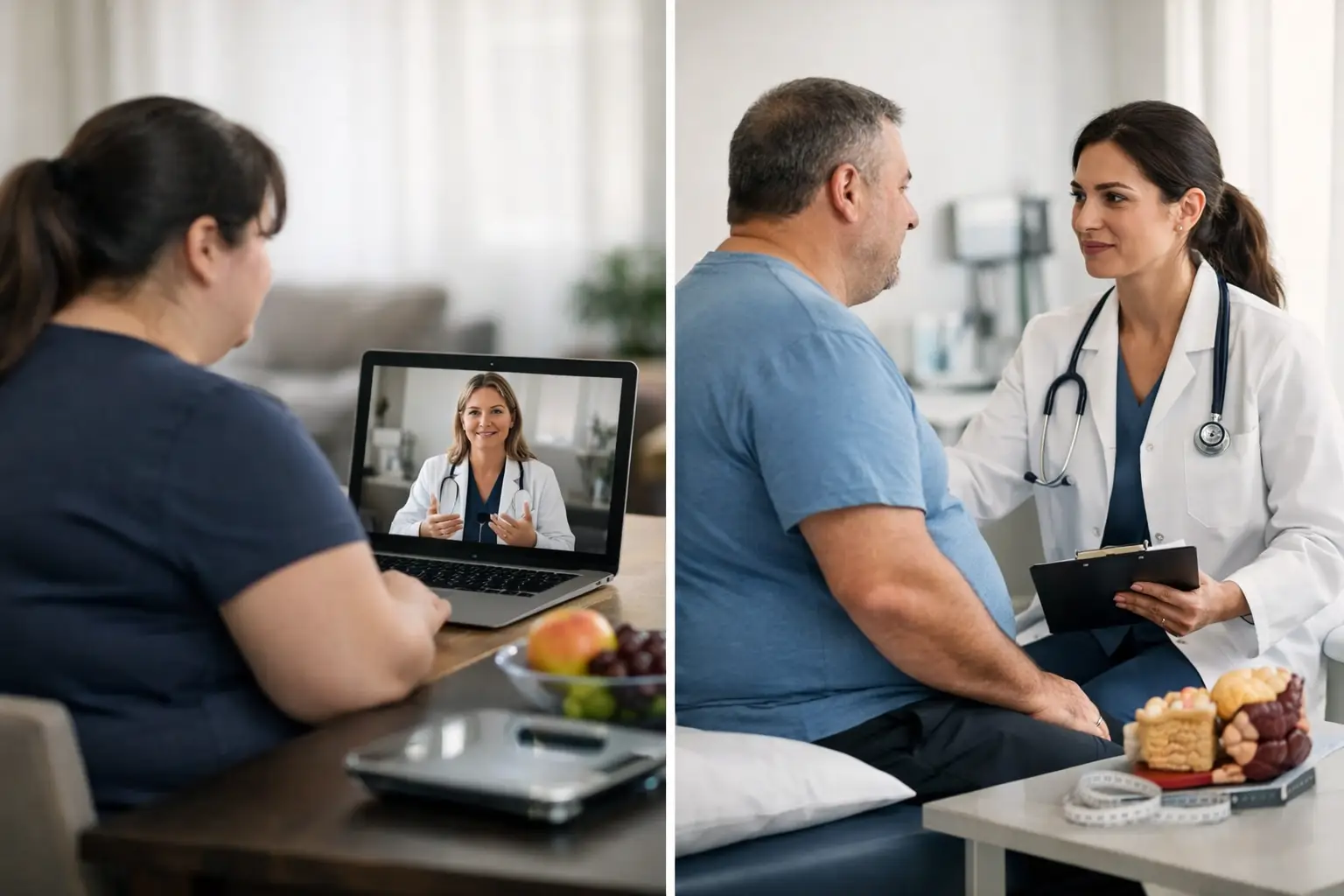
With in-person obesity care, the physician can perform a physical examination during the visit and coordinate certain testing on site. That may be helpful when someone has new physical findings, complex symptoms, severe obesity-related complications, or concerns that require immediate examination.
With physician-led telemedicine, the visit happens where many patients are most likely to keep it: at home, at work, or while traveling. A detailed medical history, medication review, nutrition discussion, sleep assessment, body-weight trend review, and symptom evaluation can all be done effectively by secure video. Laboratory orders can be completed locally, home blood pressure and weight data can be reviewed over time, and follow-up can occur without repeated travel or time away from work.
Convenience, however, is not the same as quality. A virtual obesity program that offers a brief questionnaire, an automatic prescription, and little physician access is not equivalent to comprehensive telemedicine care. The value comes from clinical judgment, continuity, and ongoing monitoring – not from the video platform itself.
What Good Telemedicine Obesity Care Should Include
Obesity is a chronic, biologically complex condition. A credible virtual program should treat it that way rather than framing it as a willpower problem or a medication transaction.
The first step is a thorough assessment. This includes weight history, prior diet attempts, physical activity, sleep quality, stress, current medications, medical conditions, family history, alcohol use, and symptoms such as fatigue, cravings, irregular cycles, low libido, hot flashes, digestive concerns, or changes in body composition. These details can point toward insulin resistance, metabolic syndrome, hormonal changes, medication-related weight gain, or other contributors that deserve attention.
Laboratory evaluation often provides another layer of useful information. Depending on the patient, a physician may evaluate blood sugar regulation, cholesterol and triglycerides, liver and kidney function, thyroid markers, nutrient status, inflammation, and relevant hormone markers. Labs do not replace the clinical conversation, but they can help turn vague frustration into a more precise treatment strategy.
A strong plan also includes follow-up that is frequent enough to be useful. Weight alone is not the only outcome. A physician should monitor medication tolerance, appetite changes, blood pressure, glucose trends when relevant, energy, sleep, waist measurements, strength training progress, and the sustainability of nutrition habits. If a GLP-1 medication is appropriate, the dose should be adjusted thoughtfully, side effects should be addressed early, and the broader plan should not disappear once the prescription is sent.
This is where continuity matters. Seeing the same physician over time makes it easier to recognize patterns, understand previous treatment decisions, and make adjustments that fit the patient rather than an algorithm. Text2MD is built around this physician-guided model, with direct access and individualized care rather than rotating providers or corporate call-center medicine.
When In-Person Care May Be the Better Choice
Telemedicine has limits, and responsible care acknowledges them. An in-person evaluation may be the better starting point when a patient needs a physical examination that cannot be deferred, has concerning new symptoms, or has medical complexity that calls for closer coordination with local specialists.
For example, new chest pain, shortness of breath, fainting, severe abdominal pain, severe dehydration, persistent vomiting, rapidly worsening swelling, or signs of a serious allergic reaction should not be managed through routine virtual obesity follow-up. Those concerns require prompt in-person or emergency evaluation.
In-person care can also be preferable for patients who do not have reliable internet access, cannot obtain recommended labs locally, or simply feel more comfortable meeting face-to-face. The best care model is the one a patient can engage with consistently and safely.
Some patients use both. They may receive longitudinal metabolic and weight-management guidance through telemedicine while maintaining a local primary care clinician for physical exams, vaccinations, urgent issues, and routine preventive services. That can work well when communication is clear and each clinician understands their role.
Medication Access Is Not a Complete Treatment Plan
GLP-1 medications and other anti-obesity treatments can be important tools for appropriate candidates. They may reduce hunger, improve glycemic control, and support meaningful weight loss when used under medical supervision. But medication selection should follow an assessment of medical history, contraindications, current prescriptions, laboratory data, treatment goals, and likely barriers to adherence.
The question is not just whether a patient qualifies for a medication. It is whether a specific medication, dose, and monitoring plan make sense for that patient now.
A quality physician will also discuss what happens beyond the first few months. Some people need a longer-term medication strategy. Others may need to pause, switch, or avoid a medication because of side effects, cost, a planned pregnancy, an underlying condition, or a changing health picture. Nutrition, resistance training, adequate protein, sleep, and preservation of lean mass still matter. A prescription without these conversations is incomplete care.
Be cautious of programs that promise a specific amount of weight loss, minimize potential adverse effects, or make treatment decisions without a meaningful medical review. Obesity care should be evidence-based, but it should also be personal.
How to Choose the Right Care Model
Start by asking what level of medical support you need, not whether virtual or in-person care sounds more appealing. If your main barrier is access, scheduling, or the inability to find a local clinician with experience in metabolic health, telemedicine may provide a practical path to consistent care. If you have complicated symptoms or need a hands-on evaluation, an in-person visit may be the right first step.
Then look closely at the practice, not just the format. Ask whether you will work with the same physician, whether labs and health history guide decisions, how medication side effects are managed, what follow-up looks like, and whether you can reach a clinician when questions arise. These answers reveal far more than a polished website or a low monthly subscription price.
The strongest obesity care does not force every patient into one delivery model. It uses the right level of access, testing, physician oversight, and accountability for the individual in front of it.
If you are tired of cycling through restrictive diets, generic programs, or rushed prescription visits, seek care that examines the full metabolic picture. A thoughtful physician relationship can make the next step feel less like another attempt at weight loss and more like a medically grounded plan for your long-term health.